TWO:Burgoyne was now in a condition which demanded all the talents of a great general. His forces were heavily reduced, those of the enemy much increased, and he was amongst bogs and wildernesses, which Barrington and Barr¨¦ had from the first declared would be fatal to any army. He had sent express after express to Howe to urge a movement in co-operation, but no news of it arrived, and every day he was becoming more and more cut off from advance or retreat. Whilst these circumstances were operating against him, Burgoyne collected his artillery and provisions for about a month, and, forming a bridge of boats, passed his army, on the 13th and 14th of September, over the Hudson, and encamped on the heights and plains of Saratoga. Just at this juncture Schuyler had been superseded by his successor Gates, yet he himself remained to give his assistance in the campaign. The day after Gates assumed the command, Morgan had marched in with his rifle corps, five hundred strong, and Major Dearborn with two hundred and fifty other picked men. Arnold, too, had returned from pursuit of St. Leger, with two thousand men. The Americans numbered, with militia continually flocking in, nearly eight thousand, whilst Burgoyne's force did not exceed half that number. To approach the Americans it was necessary to cross the low ground, seamed with watercourses and rugged with scrub and stones, and to lay down bridges and causeways. This being completed, on the 19th the British army took position at Bemus's Heights in front of the American left. Gates, stimulated by the presence of Arnold, began the attack by sending out a detachment to turn Burgoyne's right flank, but they soon perceived the covering division of Fraser, and retreated. Gates then put Arnold at the head of a still stronger detachment to fall directly on Burgoyne's position, and a severe fight commenced about three o'clock in the afternoon, which lasted until sunset. Arnold made the most impetuous[243] assaults on the British line to break it, but everywhere in vain, although the whole weight of the attack fell on three or four of our regiments, the rest being posted on some hills, and the Germans on the left at a greater distance. Whenever they advanced into the open field, the fire of the American marksmen from their concealment drove them back in disorder; but whenever the Americans ventured out, the British rushed forward and committed havoc amongst them; so the contest continued till night. The British remained in the field and claimed the victory; but it was a victory severely won, and far from decisive. The losses on both sides had been from five hundred to six hundred killed and wounded.The day before George embarked, Admiral Boscawen set sail, with eleven ships of the line and two regiments of soldiers, to intercept the French fleet, which had sailed from Rochefort and Brest to carry reinforcements to the Canadians. Boscawen was to attack and destroy the French, if possible. Boscawen came up with the French fleet on the banks of Newfoundland, but a thick fog hid them from each other. Captain Howe, afterwards Lord Howe, and Captain Andrews, however, descried and captured two of the French men-of-war, containing eight thousand pounds in money, and many officers and engineers; but the rest of the fleet, under Admiral Bois de la Motte,[119] warned by the firing, got safe into the harbour of Louisburg.
THREE:
FORE:On the fifth night of the debate Sir Robert Peel rose to speak in defence of his policy against these attacks of his enemies. It was already ten o'clock, and the House listened to him for three hours. He spoke with remarkable warmth and energy, and overpowered his opponents with the unanswerable truths of political economy, and with humorous demonstrations of the fallacies in which the Protectionist speakers had indulged. In concluding he said, "This night is to decide between the policy of continued relaxation of restriction, or the return to restraint and prohibition. This night you will select the motto which is to indicate the commercial policy of England. Shall it be 'Advance!' or 'Recede'?" The division took place on the 27th (or rather on the 28th) of February, at twenty minutes to three in the morning, when the numbers for the motion were¡ª337; against it, 240; leaving a majority for going into committee of 97.We must open the year 1790 by reverting to the affairs of Britain, and of other countries having an influence on British interests. The Parliament met on the 21st of January; and, in the course of the debate on the Address in the Commons, Fox took the opportunity to laud the French Revolution, and especially the soldiers for destroying the Government which had raised them, and which they had sworn to obey. Burke, in reply, whilst paying the highest compliments to the genius of Fox, and expressing the value which he placed on his friendship, endeavoured to guard the House and country against the pernicious consequences of such an admiration as had been expressed by Fox. He declared the conduct of the troops disgraceful; for instead of betraying the Government, they ought to have defended it so far as to allow of its yielding the necessary reforms. But the so-called reforms in France, he said, were a disgrace to the nation. They had, instead of limiting each branch of the Government for the general good and for rational liberty, destroyed all the balances and counterpoises which gave the State steadiness and security. They had pulled down all things into an incongruous and ill-digested mass; they had concocted a digest of anarchy called the Rights of Man, which would disgrace a schoolboy; and had laid the axe to the root of all property by confiscating[371] that of the Church. To compare that revolution with our glorious one of 1688, he said, was next to blasphemy. They were diametrically opposed. Ours preserved the Constitution and got rid of an arbitrary monarch; theirs destroyed the Constitution and kept a monarch who was willing to concede reforms, but who was left helpless. Fox replied that he had been mistaken by his most venerated and estimable friend; that he was no friend to anarchy and lamented the cruelties that had been practised in France, but he considered them the natural result of the long and terrible despotism which had produced the convulsion, and that he had the firmest hopes that the French would yet complete their Constitution with wisdom and moderation. Here the matter might have ended, but Sheridan rose and uttered a grand but ill-considered eulogium on the French Revolution, and charged Burke with being an advocate of despotism. Burke highly resented this; he made a severe reply to Sheridan; and instead of the benefits which he prognosticated, Burke, with a deeper sagacity, declared that the issue of that revolution would be not only civil war but many other wars.
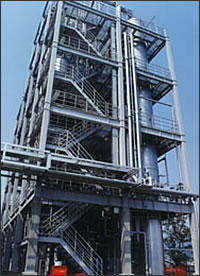
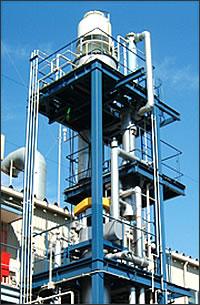
Methanol refinement systems, amyl alcohol refinement systems, ethanol refinement systems, hexanol distillation systems, propanol refinement systems, cyclohexanol distillation systems, isopropanol dehydration systems, ethylene glycol recovery systems, and butanol distillation systems.
FORE:
Hexane distillation systems, tall oil distillation systems, benzene distillation systems, lubricating oil refinement systems, xylene-free distillation systems, low-boiling gas distillation systems, ethylbenzene recovery systems, fusel oil distillation systems, naphthalene distillation systems, propylene recovery systems, and turpentine oil distillation systems.
FORE:
Ether distillation systems, camphor distillation systems, epichlorohydrin distillation systems, aniline distillation systems, dioxane refinement systems, acetonitrile distillation systems, furfural refinement systems, formalin distillation systems, cyclohexane distillation systems, monoethanolamine rectification systems, polyglycol ether distillation systems, dimethylformamide recovery systems, acrylic glycol ether distillation systems, acrylonitrile refinement systems, acetone recovery systems, pyridine distillation systems, methyl ethyl ketone recovery systems, picoline distillation systems, methyl isobutyl ketone recovery systems, and acetaldehyde recovery systems.
